In loving memory

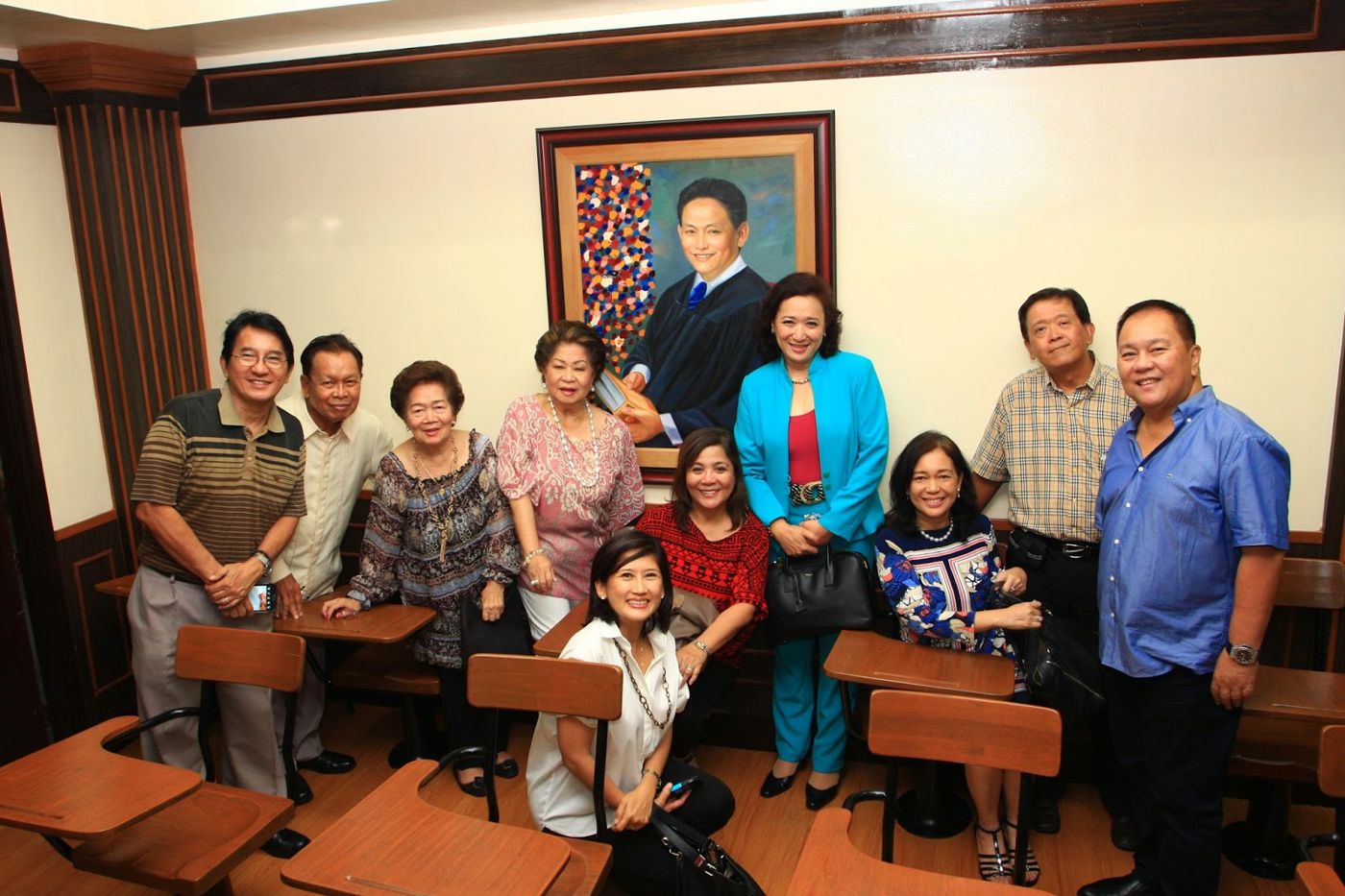
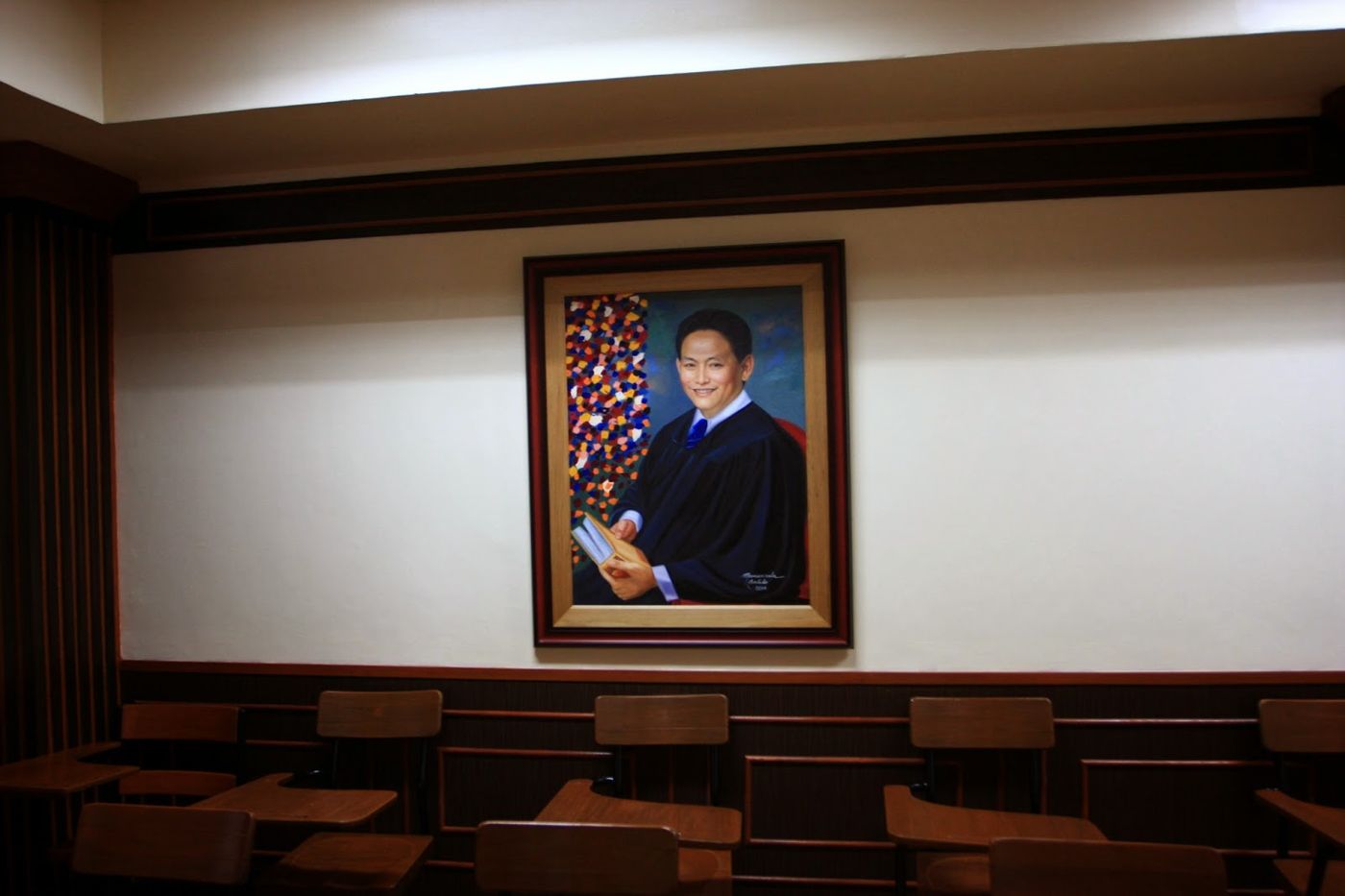
Painted portrait of Judge Voltaire Y. Rosales in judicial robes

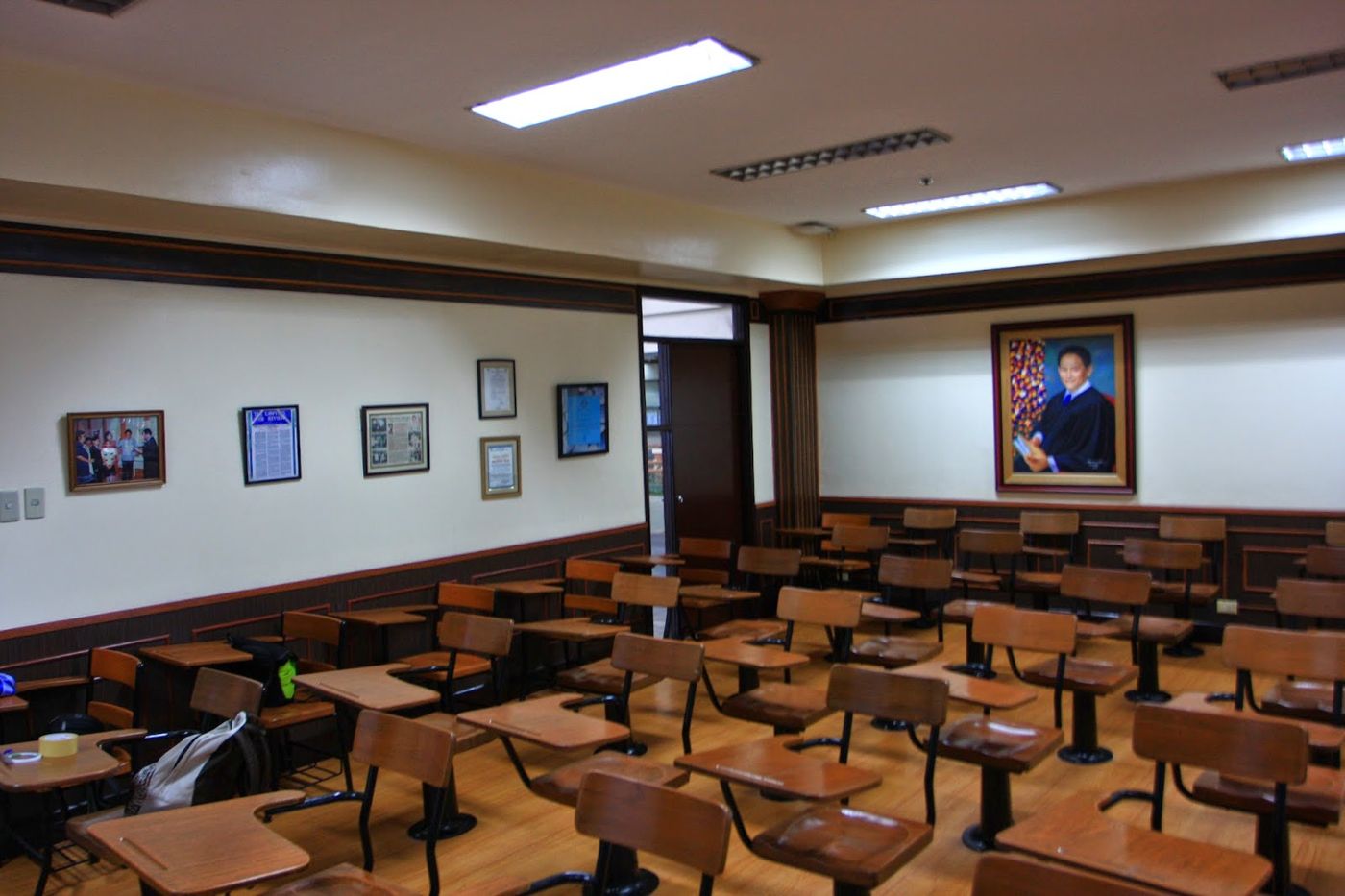
From his portrait in the Rosales Room, Ateneo Law School

Hon. Voltaire Ylagan Rosales

Executive Judge  ·  Husband  ·  Father  ·  Champion of Human Rights

May 30, 1956  –  June 10, 2004

First recipient, Ka Pepe Diokno Award as a Champion of Human Rights, De La Salle
Lux-in-Domino Award, Ateneo de Manila University

His Life

A Life of Quiet Conviction

Voltaire Ylagan Rosales, "Butch" to those who loved him, was a son of Batangas. He studied at Letran College, graduated from Bauan High School, went on to De La Salle University, and earned his law degree at the Ateneo de Manila, graduating on March 25, 1981. At that commencement, Justice Pompeyo Diaz urged the graduates to find a passion for justice strong enough to let them stand alone. He took the charge to heart. That same year he passed the Bar with distinction, placing 25th.

He began as an associate at the De Santos, Balgos and Perez law office, then served his father-in-law, Assemblyman Rafael Baltazar Legaspi of Aklan, and stood as legal counsel for the opposition in Aklan through the 1986 snap election. From 1986 to 1995 he was a Solicitor in the Office of the Solicitor General. On October 7, 1995, he was appointed to the Regional Trial Court, Branch 83, in Tanauan, Batangas, where he became Executive Judge.

His court was known as one where the lowliest citizen could stand unafraid of the mightiest. He lived by the old maxim fiat justitia, ruat caelum: let justice be done, though the heavens fall. When a state university campus in Sto. Tomas, Batangas, fought for its survival in court, its community, after the case was decided, honored him for bringing social justice to thousands of its students, from young children to young adults.

On the bench, he did not bend. He heard the gravest criminal cases alongside the ordinary docket, and he was known for treating the rich and the poor, the powerful and the powerless, with the same impartiality. He decided cases at a record pace. He turned away offers of money and ruled despite threats to his life. When the threats grew worse, he declined a transfer to a safer post, believing that if he fell in the line of duty, it meant God had called him. He fell in the line of duty on June 10, 2004, just eleven days after his 48th birthday.

His death did not pass unanswered. His widow spoke out publicly against a system that made one judge in each locality the target for every dangerous case. Within three months, facing a continuing wave of killings of judges, the Supreme Court acted: in August 2004 it abolished the special heinous crimes courts and returned those cases to raffle among all trial courts, a reform meant to keep any one judge from standing alone against the gravest threats.

The next year, both of his alma maters honored him. De La Salle conferred on him the first Ka Pepe Diokno Award as a Champion of Human Rights, and the Ateneo de Manila conferred its highest alumni honor, the Lux-in-Domino Award. In 2025, the Supreme Court approved naming the Tanauan City Hall of Justice after him.

At home, his priorities were simple. Whatever came, he would tell his wife, Atty. Ma. Filomena "Nena" Legaspi Rosales, what mattered was that they were together. He passed that steadiness on to his children, and today his name lives on in a grandson he never got to meet.

Judge Rosales smiling, in a dark leather jacket
On a trip to the United States with his wife, in his favorite leather jacket
What mattered was that we were together. — As his family remembers him

Recognition

Honors

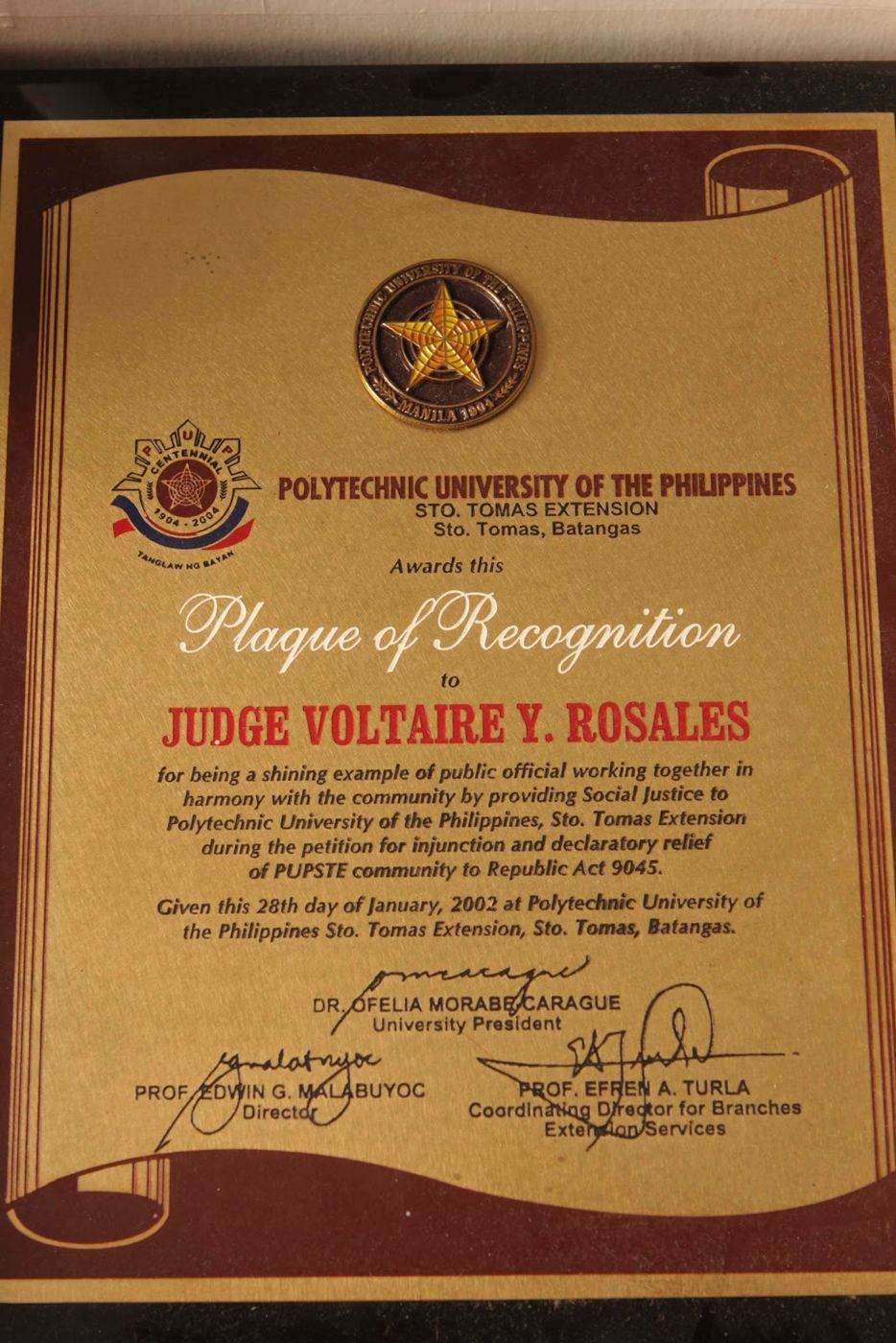
Polytechnic University of the Philippines · 2002

Plaque of
Recognition

From PUP Sto. Tomas Extension, Batangas, honoring him as a shining example of a public official working in harmony with the community, for providing social justice to the campus during its fight over Republic Act 9045.

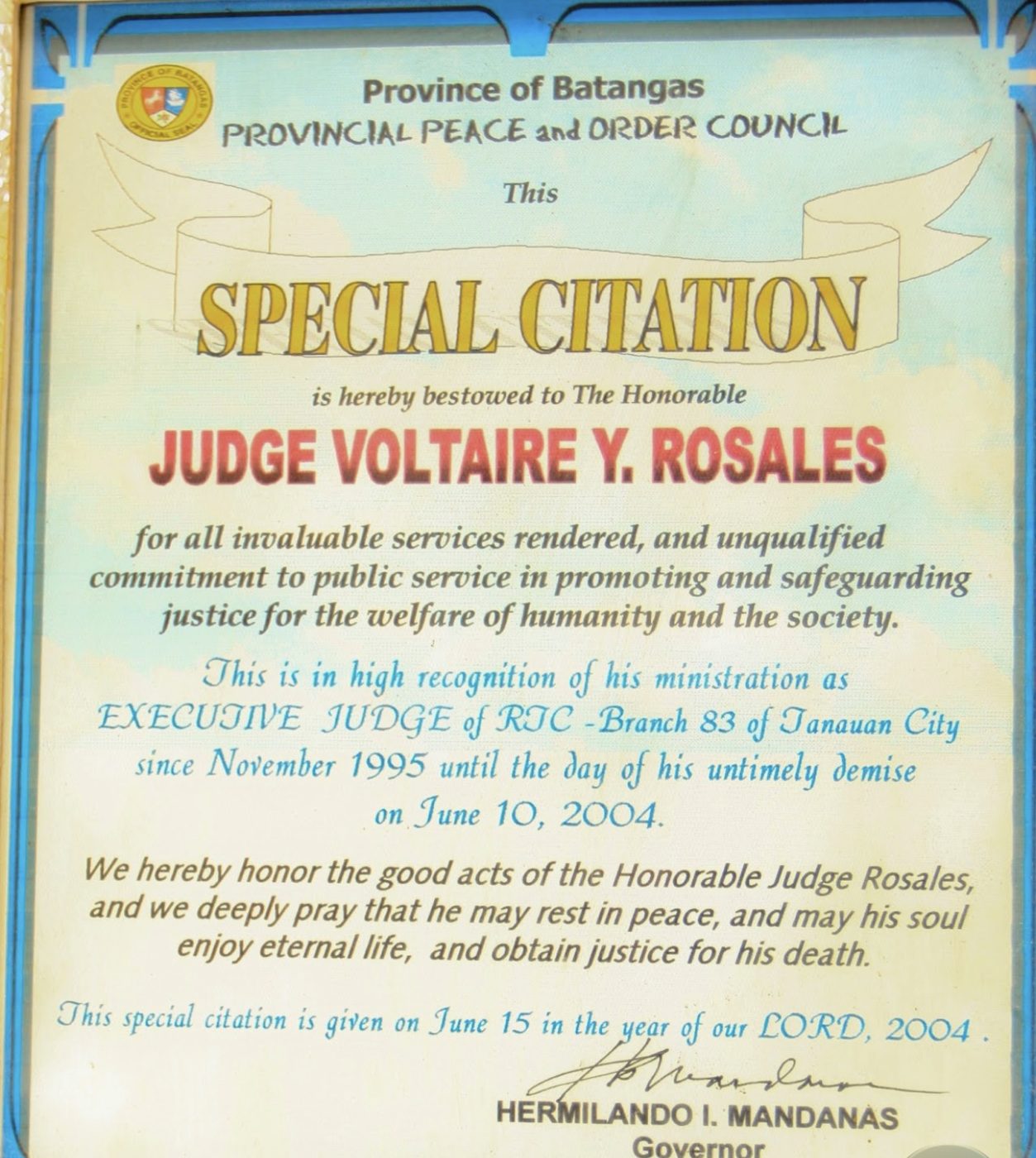
Province of Batangas · June 2004

Special
Citation

From the Provincial Peace and Order Council under Governor Hermilando I. Mandanas, five days after his death, “for all invaluable services rendered, and unqualified commitment to public service in promoting and safeguarding justice for the welfare of humanity and the society.”

De La Salle · March 2005

Ka Pepe Diokno Award
Champion of Human Rights

First recipient, conferred posthumously by the De La Salle Professional Schools Graduate School of Business at the launch of the Jose W. Diokno Distinguished Professorial Chair in Business and Human Rights. His wife and children accepted it on his behalf.

Ateneo de Manila University · July 2005

Lux-in-Domino
Award

Conferred posthumously at a Special Academic Convocation in the Rev. Henry Lee Irwin, S.J. Theater. The university's capstone honor for an alumnus whose life and work embody its ideals as a Filipino, Catholic, and Jesuit institution. Its name, "light in the Lord," is the Ateneo motto, drawn from Ephesians 5:8.

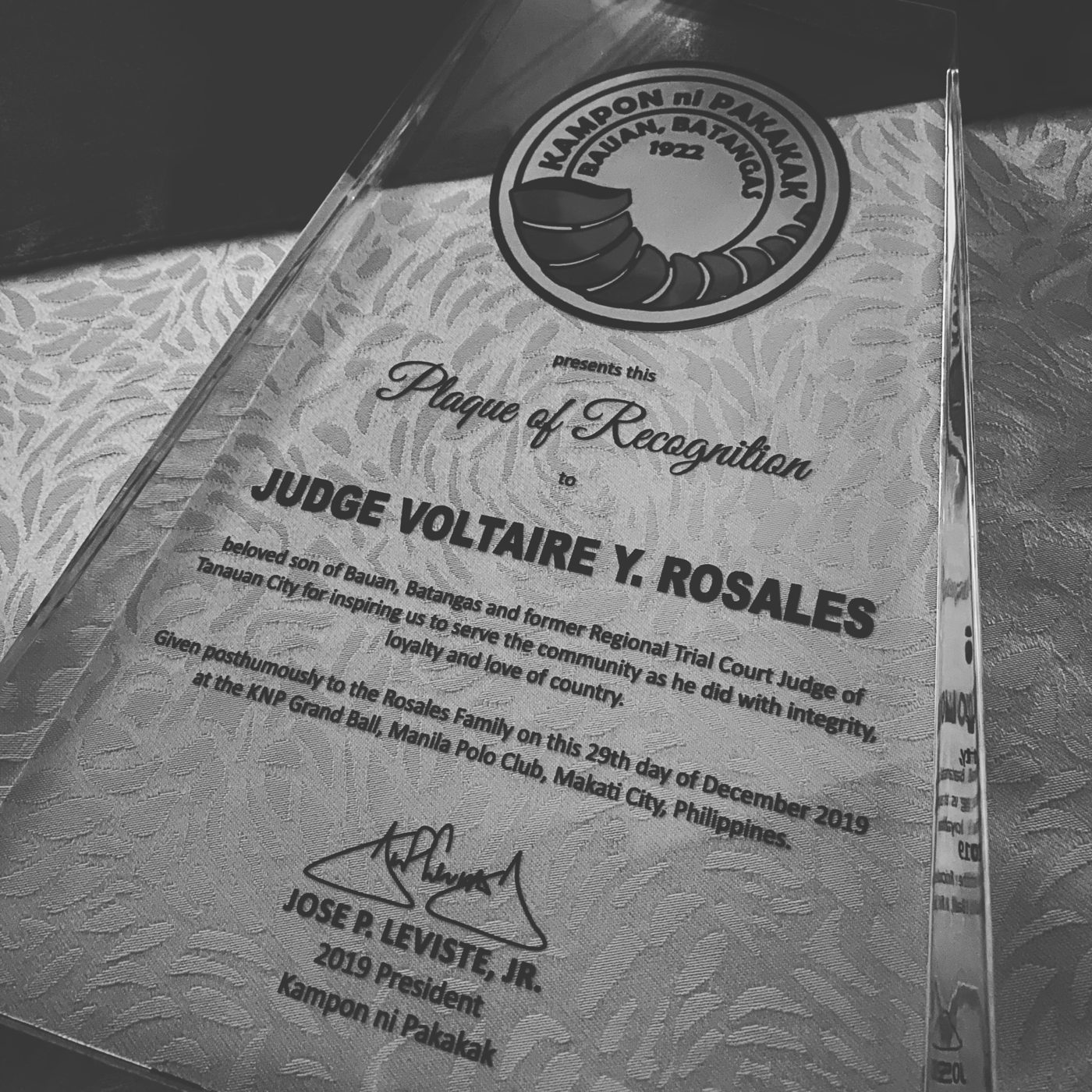
Kampon ni Pakakak, Bauan · December 2019

Plaque of
Recognition

From the Bauan civic society founded in 1922, honoring a “beloved son of Bauan, Batangas” for “inspiring us to serve the community as he did with integrity, loyalty and love of country.” Given posthumously to his family at the KNP Grand Ball.

Supreme Court of the Philippines · 2025

The Hall of Justice
Bears His Name

By resolution of the Court en banc dated April 22, 2025 (A.M. No. 25-04-13-SC), the Tanauan City Hall of Justice, where he served as Executive Judge, was named after him.

"Incorruptible judge gets Pepe Diokno Award"
The Philippine Star · March 8, 2005

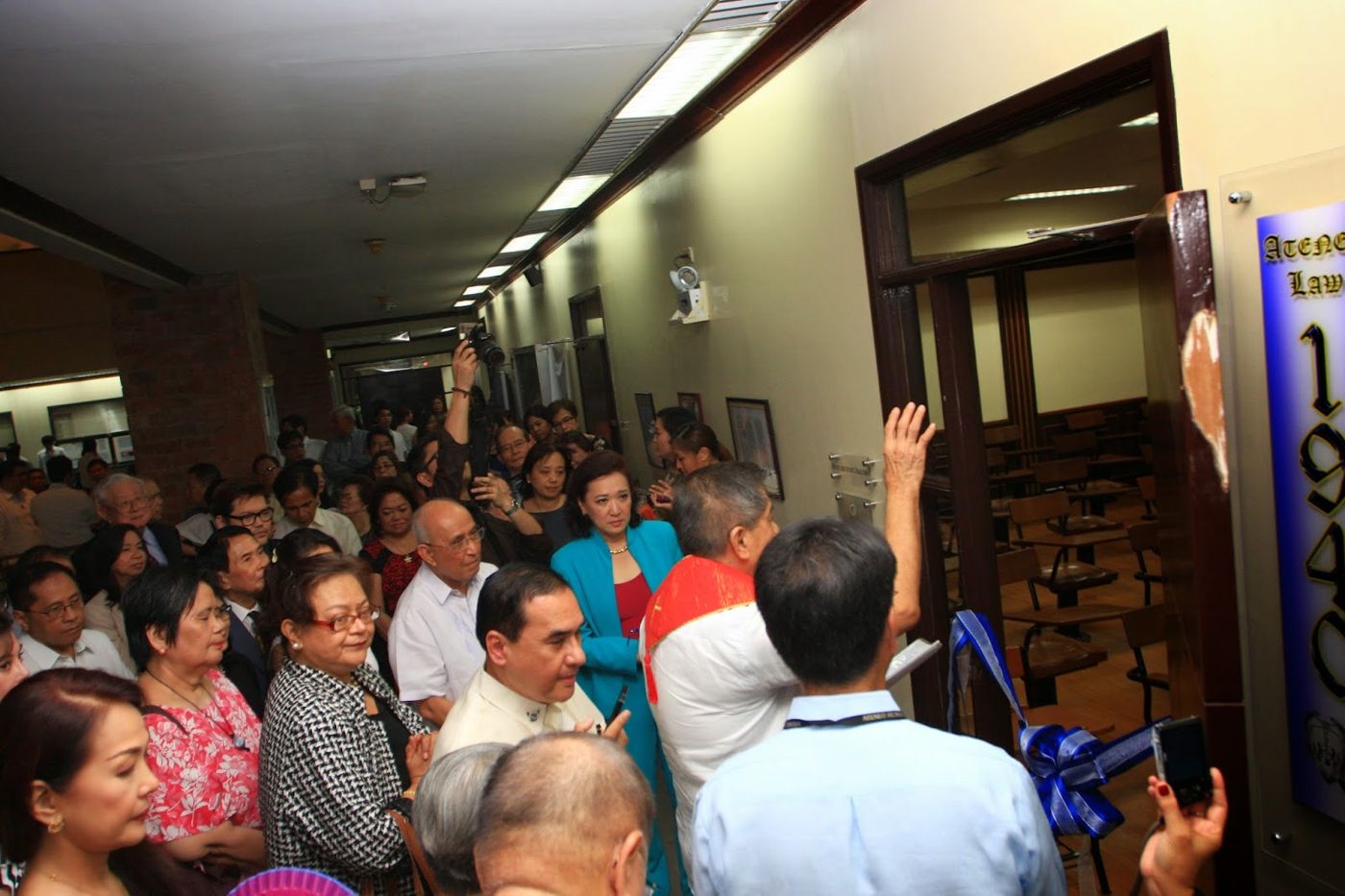
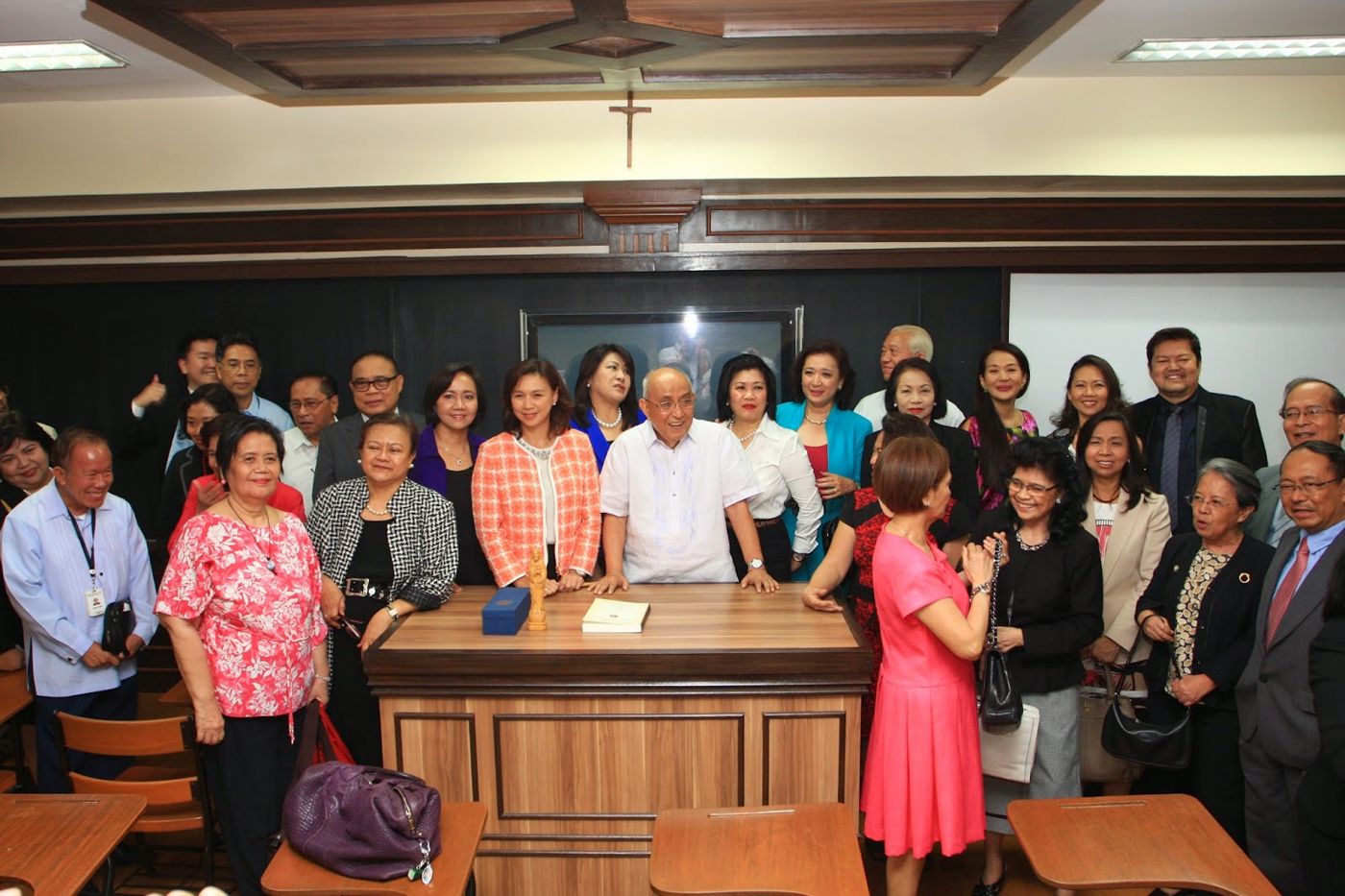
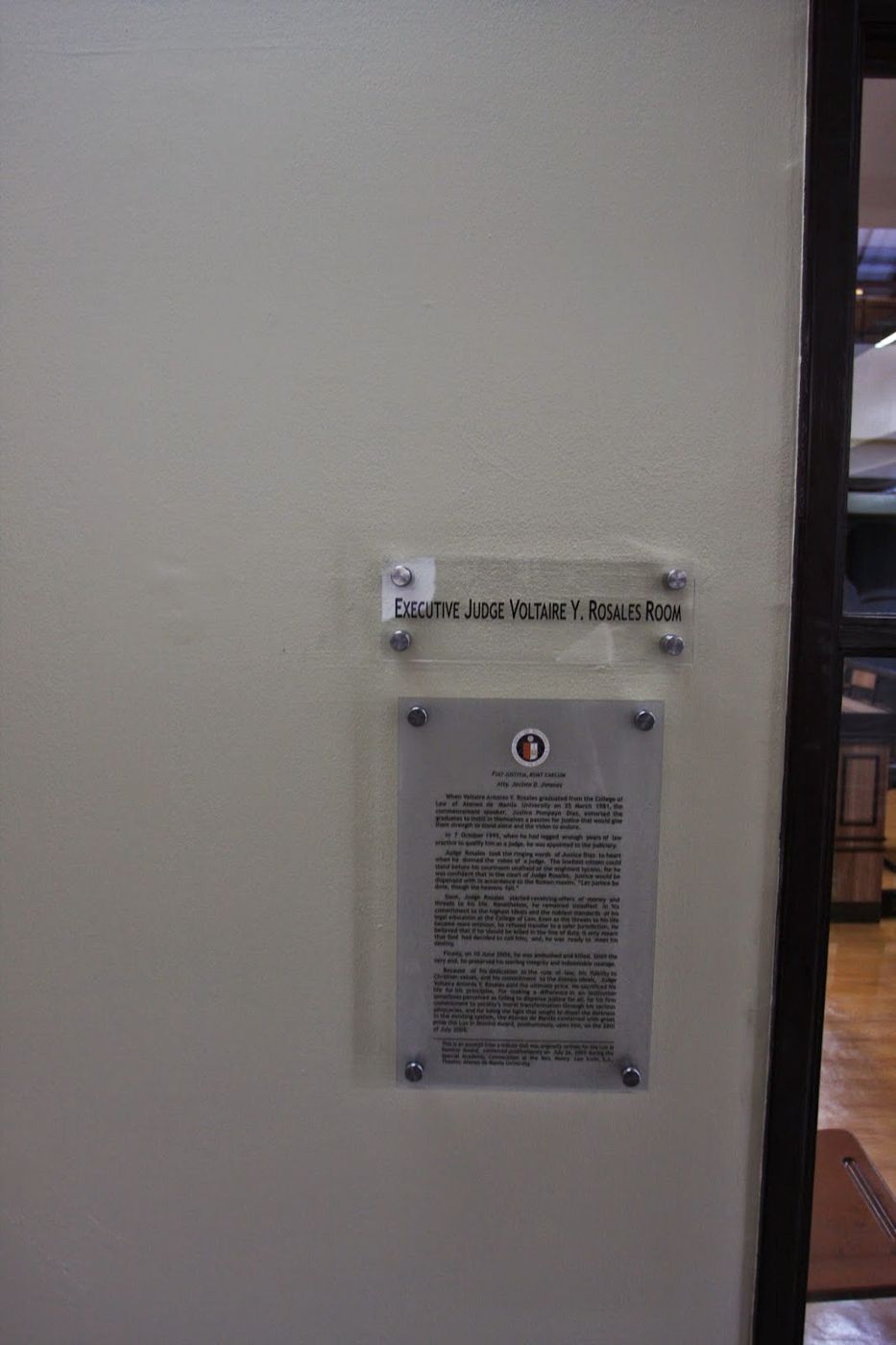
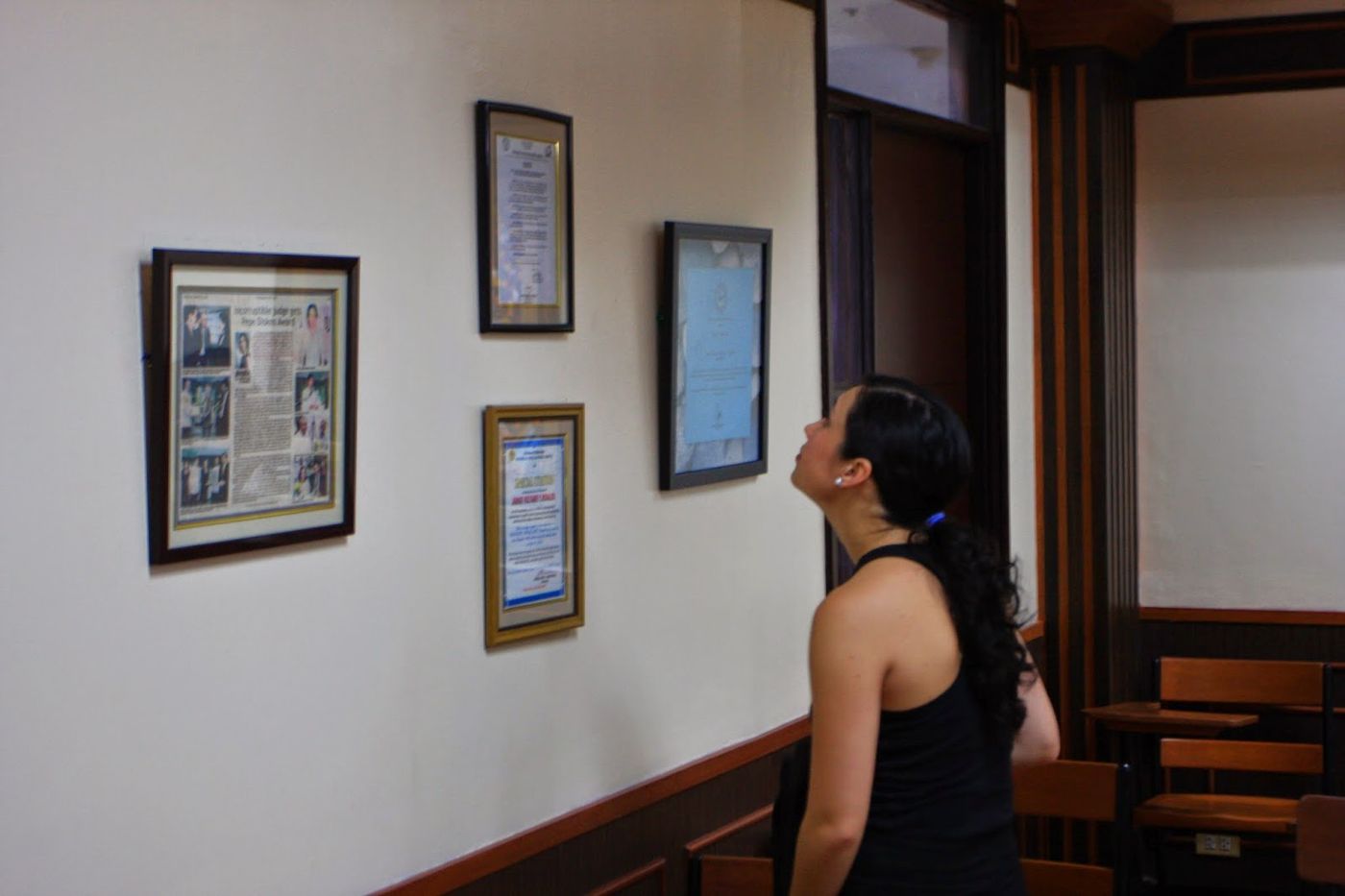
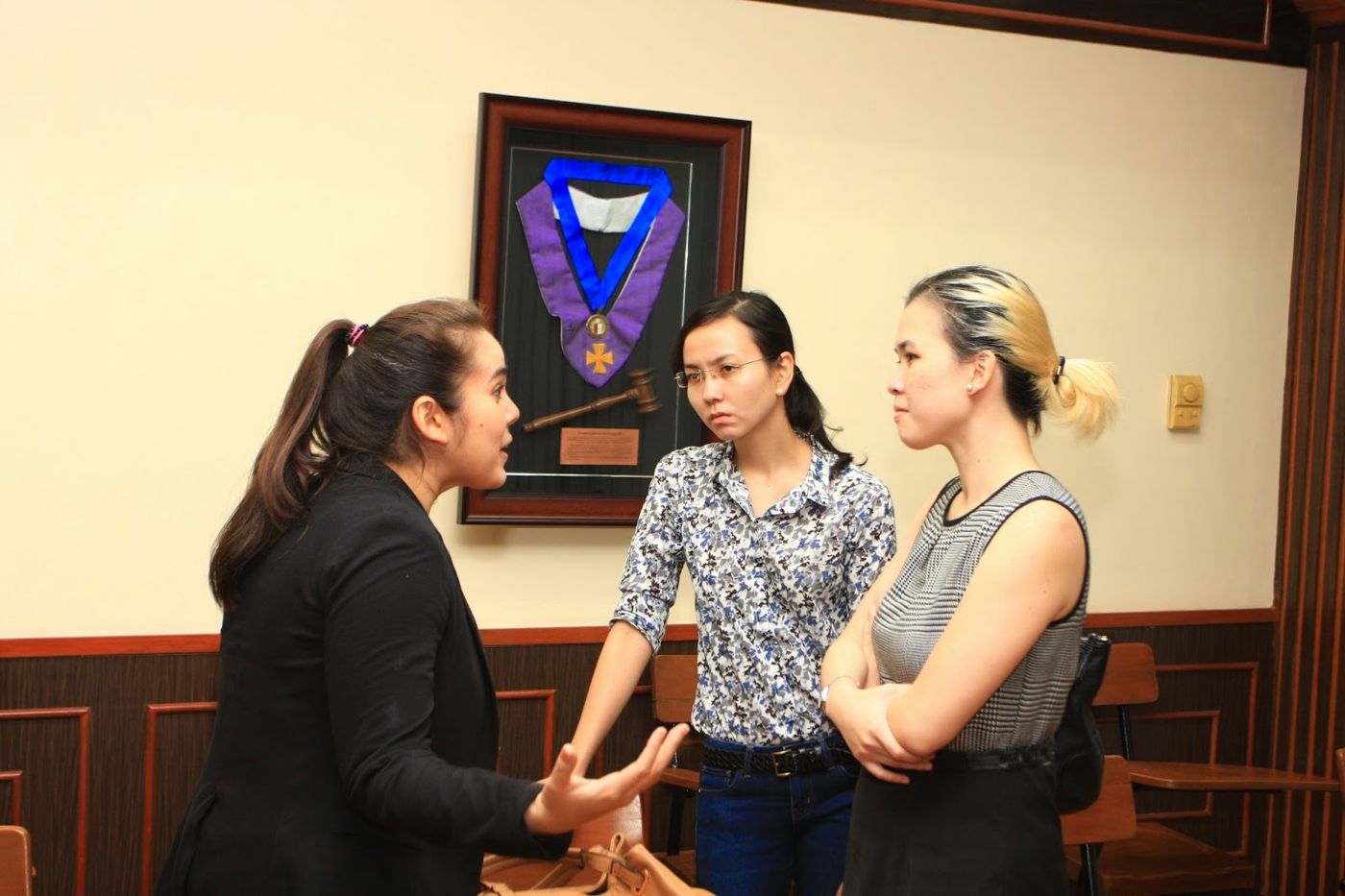
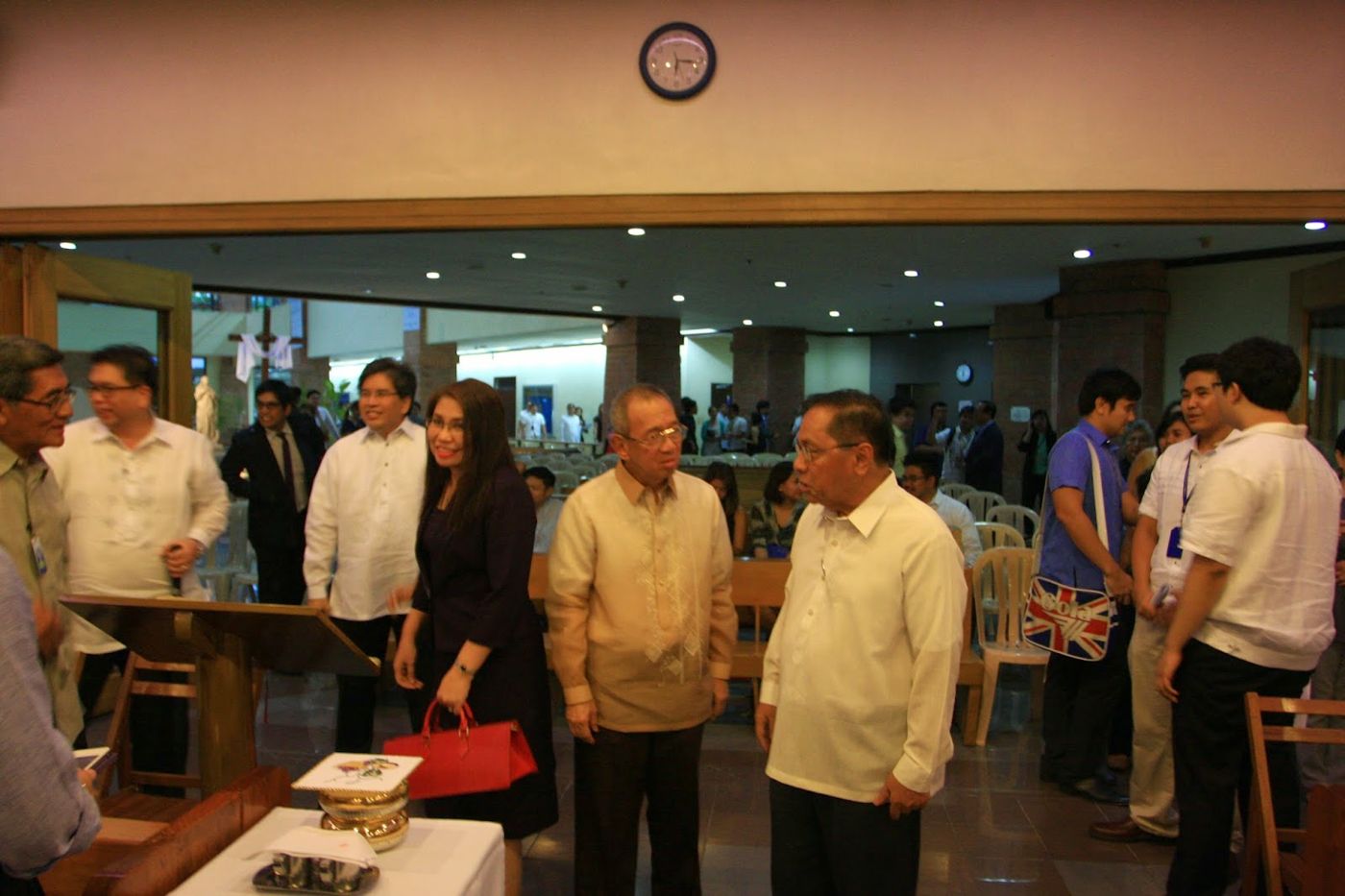
Since 2014, the Executive Judge Voltaire Y. Rosales Room at the Ateneo Law School, Rockwell, has carried his name. His portrait hangs at the front, his honors line the walls, and a plaque at the door carries the tribute written for his Lux-in-Domino Award by Atty. Jacinto D. Jimenez, titled Fiat Justitia, Ruat Caelum.

The Supreme Court of the Philippines

A Legacy for the Judiciary

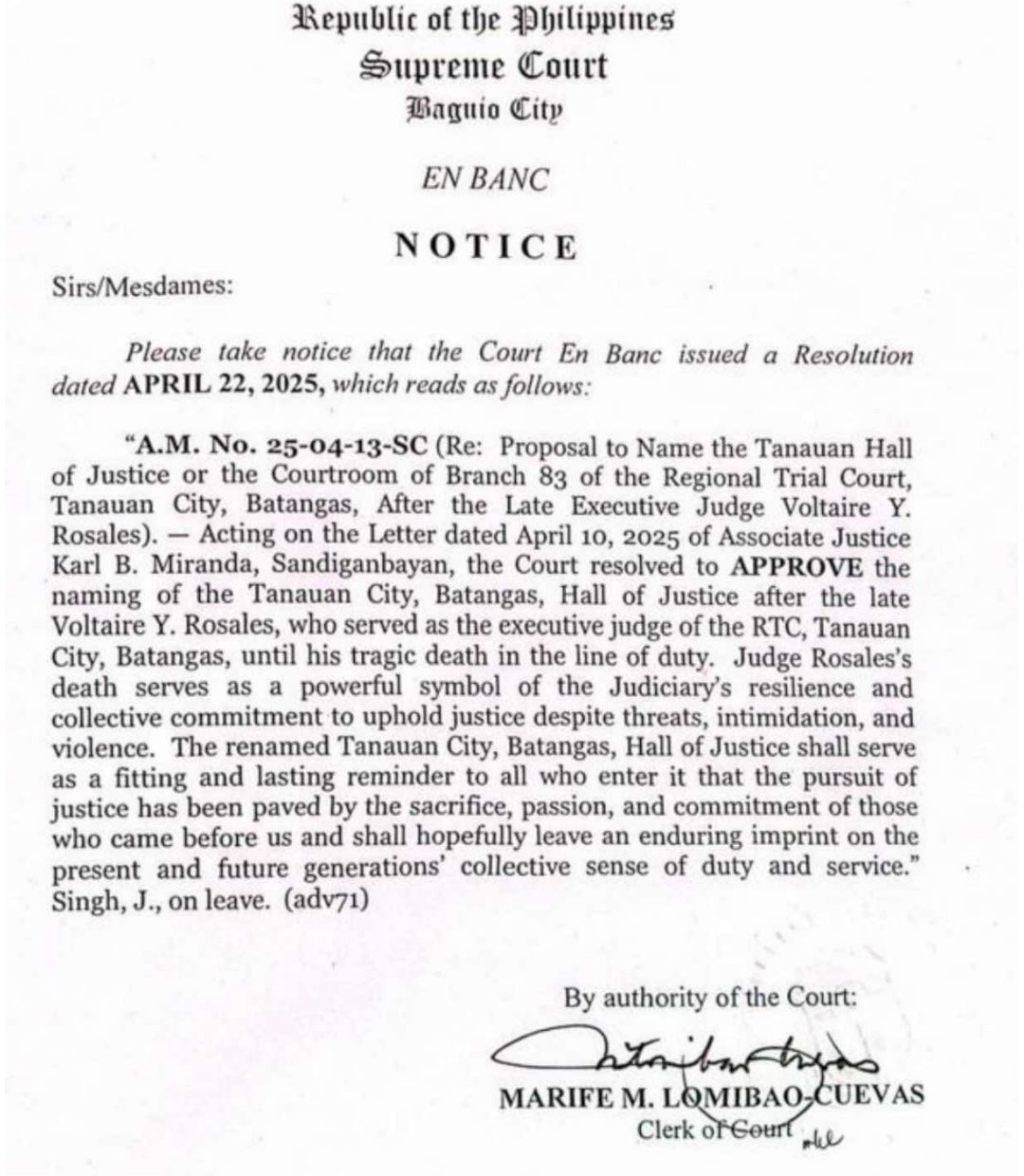
Supreme Court of the Philippines, Baguio City · En Banc · Notice

“A.M. No. 25-04-13-SC (Re: Proposal to Name the Tanauan Hall of Justice or the Courtroom of Branch 83 of the Regional Trial Court, Tanauan City, Batangas, After the Late Executive Judge Voltaire Y. Rosales). — Acting on the Letter dated April 10, 2025 of Associate Justice Karl B. Miranda, Sandiganbayan, the Court resolved to APPROVE the naming of the Tanauan City, Batangas, Hall of Justice after the late Voltaire Y. Rosales, who served as the executive judge of the RTC, Tanauan City, Batangas, until his tragic death in the line of duty. Judge Rosales’s death serves as a powerful symbol of the Judiciary’s resilience and collective commitment to uphold justice despite threats, intimidation, and violence. The renamed Tanauan City, Batangas, Hall of Justice shall serve as a fitting and lasting reminder to all who enter it that the pursuit of justice has been paved by the sacrifice, passion, and commitment of those who came before us and shall hopefully leave an enduring imprint on the present and future generations’ collective sense of duty and service.”

“the pursuit of justice has been paved by the sacrifice, passion, and commitment of those who came before us”

A.M. No. 25-04-13-SC  ·  Resolution of the Court En Banc  ·  April 22, 2025
By authority of the Court: Marife M. Lomibao-Cuevas, Clerk of Court

House of Representatives · March 15, 2017

Remembered in Congress

Thirteen years after his death, his son appeared as a resource person before the House Committee on Justice, at a subcommittee hearing on judicial reform. There, members of the House paid tribute to Judge Rosales, telling his son:

“Isang bayani ang iyong ama.”Your father is a hero.

These recordings were taken by his son during that public hearing.

Subcommittee hearing, March 15, 2017 · 1 min 29 s
Subcommittee hearing, March 15, 2017 · 51 s

Milestones

Timeline

1956
Born on May 30.
1981
Graduates from the Ateneo College of Law on March 25, and passes the Bar with distinction, placing 25th.
1984
Serves Assemblyman Rafael Baltazar Legaspi of Aklan in the Batasang Pambansa.
1986
Legal counsel for the opposition in Aklan in the snap election.
1986
Joins the Office of the Solicitor General as a Solicitor, serving until 1995.
1995
Appointed to the judiciary on October 7, to the Regional Trial Court Branch 83, Tanauan, Batangas.
2002
Honored on January 28 by the Polytechnic University of the Philippines, Sto. Tomas Extension, for providing social justice to its community.
2004
Turns 48 on May 30. Eleven days later, on June 10, he falls in the line of duty.
2004
On June 15, the Province of Batangas, through its Provincial Peace and Order Council, confers a Special Citation honoring his service as Executive Judge since November 1995.
2004
On August 24, the Supreme Court abolishes the special heinous crimes courts and spreads those cases across all trial courts by raffle, so no single judge carries the danger alone (A.M. No. 04-6-18-SC).
2005
Named first recipient of the Ka Pepe Diokno Award as a Champion of Human Rights, De La Salle.
2005
Receives the Lux-in-Domino Award from the Ateneo de Manila University in July.
2014
On the tenth anniversary of his death, the Ateneo Law School dedicates the Executive Judge Voltaire Y. Rosales Room, blessed at the Red Mass.
2017
On March 15, at a House Committee on Justice subcommittee hearing on judicial reform, where his son appears as a resource person, members of the House tell him: “Isang bayani ang iyong ama” (Your father is a hero).
2019
On December 29, Kampon ni Pakakak of Bauan honors him as a beloved son of Bauan with a posthumous Plaque of Recognition.
2025
On April 22, the Supreme Court approves naming the Tanauan City Hall of Justice after him.

Remembrances

Stories of Him

My Father, the Judge

By Vic Rosales · Philippine Daily Inquirer · June 16, 2004

An upright man

My father, Judge Voltaire Rosales of Tanauan, Batangas, was an upright man. He never stole from the government. Jueteng and drug lords would offer him bribes, but he would refuse them. He would tell people from the underworld to give the money to the church. He was a lay minister for 16 years. He always told me that integrity cannot be bought.

One time a guy left a big box full of thousand-peso bills at our house. He threw it back at him and told him to never come back.

My dad became a judge because he had always wanted to work for his province. Every day, he would motor to Batangas from our residence in Dasmariñas Village, Makati. He didn't mind not making money. We were okay as mom is the business type. They were married for 21 years and their love for each other was unwavering.

Continue reading

My dad was my best friend. Every day, he would call me up to ask what time my dismissal was. He would then look at the movie schedule and we would always meet at Greenbelt 4 (he would come all the way from Batangas).

We would watch a movie practically every day of the week. It didn't matter what movie. We would even watch the same movie twice if we had the time. It was because of his constant company that I never tried smoking or drugs.

But he would cancel the treat if he had to work overtime in Batangas. At one time, when I was with him in Batangas and he was about to close shop at 6, he saw several old women crying. When he learned that their young kin had been arrested but they could not post bail because no one wanted to bother with them, he said we'd catch a later show and ordered the office hours extended to allow the women to post bail. "Justice delayed is justice denied," he said.

When it came to high-profile cases, he never liked being on camera. In a celebrated promulgation covered on television, he just had the secretary read the verdict while he walked away from the cameras.

Somebody once offered to write an editorial in praise of him, but he just said that God is the only one he wishes to please.

He was my billiards buddy. Every night, we would play a game, a rotation of 9-ball, either race to three if he was tired, or race to five if he was not.

He always made time for me. When I was diagnosed with clinical depression, he would stay by my bedside and watch TV with me till I fell asleep. I once saved up and bought him a nice billiard cue.

It was he who taught me to be happy staying at home with my family. While people my age were clubbing or partying late, I was at home enjoying my family.

My father was the pillar of my family. He was such a family man. He made our simple four-member family seem very big. He always told me to take care of my sister. I promise you, Dad, I will.

He was a nice person. To this day I cannot find a single person who could say he was a mean man. He was always considerate and polite.

A holy man

My father was a holy man. When I was 6, he wanted me to become an altar boy, just like him when he was a kid. But I guess the rebel in me wanted to be different.

Whenever we quarreled, he would tell me, even with my weak faith, "Son, no matter what, there is a God."

Even if he knew I hated going to church, he would tell me, "Even if you just pass by or sit outside, that is good enough, as long as your intention is sincere, God will help you get back."

It was he who taught me to pray in the chapel whenever I had problems. I got the habit from him to pray and reflect in the chapel, to ask God for strength. I have to admit the habit has helped me in the toughest of times. My daddy gave me the string that has kept me connected to God.

He always told me, "Son, I may not be able to give you the luxuries of life, but know that what I am doing is right and it is what must be done. Someday you'll have this, the only thing I can give you."

It was his ring that his father had given him. It had a "V" on it. He had shown it to me so many times. I wear it now.

I lift my dad up to the Lord. I ask the Lord to take care of my dad and give him peace. I ask the Lord to give me the strength to take care of my mom and my sister.

My daddy used to tell me, "Son, as long as you do what is right, do what God wants for yourself, your family and your country, you will be protected by God."

That is why he never bothered bringing along a bodyguard.

In this sick system we have in the Philippines, it is the good people who get killed while the evil ones enjoy their loot at the expense of the people.

My dad did not deserve to be killed. He was no criminal to be shot in the head.

He died because he refused to give in to peer pressure. He died because he refused to tarnish his name and the judicial system's integrity.

We are alone now. At night it will be just us. My days after school will be much lonelier without the after-class movies and late-night billiards. Saturday-night movies will never be the same again without the wisecracks of my dad.

But Dad will always be with us. And I know he can be an inspiration to those who work in government, that by loving God and others with a sincere heart, they can be happier than anyone and have the joy that no material possession can ever give.

I miss my father, I miss my best friend.

God bless you, Dad. I love you.

Vic RosalesHis son, writing at 20, days after his father's death
Love Can Be Silent

By Vic Rosales · Philippine Daily Inquirer · 2004

The sound of silence can be deafening. Love in silence, can be the most unbearable. To those who must feel love through articulation or verbal expression, silence is the cold air that chills the heart in times of loneliness. But this was not the case with my father. Everyone who has met my father has always said that he was a quiet man. He had the demeanor of a wise man, who listened to all, and said what is needed. With my father, his actions of love spoke much louder than the few I love yous that would ever leave his mouth. His love was always felt, even when he was not physically present. One way this was done was through his cell phone. He probably had the highest bill among all of us in the family, but it was worth every peso because we knew majority, if not all his calls were to each of his family. He rarely texted us, but he always called. The few texts he would send were very concise. "Where are you?", "how are you doing?" and "please take care of yourself" were one of the most common messages I would receive. Love would be felt with every text.

I often wondered why he was so quiet. I guess he always felt good intentions are better seen than heard. Everyone says they want change, but it is the individual who works for it, who sees beyond the pessimism of the world and actually perseveres for what is right, not popular, will be the one who makes the real change. These thoughts he would express to me as I grew up.

Continue reading

One time we had a fight because he didn't take his medicines for his diabetes. I ended saying an expletive at him and saying "ganyan na pala? Kanya kanyang buhay na? Bahala ka na diyan!" I left his room and not even five minutes later, I texted him "I'm sorry dad it's just that we have so much to worry about you have to live long for me, I love you very much." He replied with, "Its ok, I love you too."

The week before his death, it happened again. Same fight, but this time I could sense him being very tired. He replied, but this time it was only an "its ok". Troubled I walked to his room repeatedly saying sorry and asking if he was mad (which was rhetorical because he never got mad, it was more of leading him to say whatever was bothering him.) He said, "it's nothing, I'm just very tired". It wasn't uncommon for him to be tired, I have been accustomed to his diabetic ways, but that Sunday was the most disturbing experience I've ever had with my father. For the first time in quite awhile, I felt something was tiring him more than usual. Maybe it was a premonition, or just a case he was thinking about, but I had never feared so much for my best friend.

The moments preceding his death was a testament to his beautiful love which he blessed our family with. My father had a gruesome death that not even an animal should be given. He was shot at close range 5 times in the head, shattering his brain. By all accounts he should have just dropped dead with his mortal wounds. But my father in order to avoid hitting people on the street, managed to swerve the car to a wall. He got out of the driver's side of the car and fell on the street. My father lived for more than 2 hours with his wounds. I've heard stories of praise of how, with the injuries he had sustained, that it was unbelievable that he lived to be brought to a hospital. No cries of pain were heard, knowing my father, he kept it to himself and like other times when he was sick, he prayed for God's mercy.

My mother on the other hand was determined to be with Dad right away. She was rushing with my sister, grandmother and aunt from our house to Tanauan, Batangas which is a good one hour and a half away. She was praying to God, "Please, Lord, Just one minute!" As the car speedily drove towards Tanauan City which my father dedicated his life to serving, my mother got a call telling her my father was still alive.

I was on the way home when I heard the news. My body felt so weak. My legs felt like jelly as I took every step, and I was close to breaking down as I entered the house. Every moment I could feel my dad's pain and feared for the unknown as it was hard to contact my mom and sister. I fell into a delirium talking to my father asking him to give me strength to take what had happened to him.

It was about 1 o'clock when my mother reached him. It was a sight no wife or daughter should ever see. A husband, a father, drenched in a pool of his own blood hanging on to dear life through God's favour. His silence was like a knife cutting through their hearts, something that even I could feel all the way in our house at Makati. When my mother arrived, my father had one eye shut and the other half open. My mother wishing for my father's pain to end and for him to rest, closed his half open eye. Then the miracle was seen. My father opened his eye and then my mom knew that God had answered her prayers for that one minute with him. Tears falling from her face, she told my dad "I love you very much, and I know you love me" and with that my father smiled for the last time and died in my Mom's embrace.

It is a tale that will forever echo in my mind. Even with my father's silence he touched us with his love to the very end. In a way it was as if God taught him to prepare us for this tragic end. It's not easy being just three now, but dad always said God does things for a reason. His silence has taught us to feel him even without his physical presence. It is a surreal experience to lose someone so violently. I always believed a man devoted to the Sacred Heart and always in the service as a Eucharistic minister would always be protected by our Lord.

God though has a bigger mission for him. That is probably why he had to go that way. Going quietly would have made him a statistic. Because of his brutal murder, people have become aware of the dangers of being a judge in this country. Judges are the front liners in the dispensation of justice as well as sitting ducks for hardened criminals who did not agree with the decision of the judge. They are a mighty tough crowd that silently serves their country, risking their own life and the future of their family.

Let this be the last atrocity to face our judges. It is no piece of cake losing a father, a best friend all in one. He is a hero without a doubt. To this misguided government he was a statistic. That should not be the case, judges are human beings with loved ones just like any other mayor or congressman or any other official. There must be reforms to protect and support judges and their families during their life and after their demise.

His physical presence may be gone, but his undying love for God, his family and his country will be eternally remembered. I will miss his caring voice, loving handshake and the tight hugs which made me feel secure and happy. When all is said and done, we will return to the silence of our home, but we will forever feel the silent presence of my father, my dad, my hero and as always, my best friend.

Vic RosalesHis son

As Others Remembered Him

“If We Don’t Avenge the Murder of Judge Rosales…”

By Max V. Soliven · The Philippine Star · June 16, 2004

“one of our country’s bravest and most accomplished judges”

Writing six days after his death, the veteran columnist set out the judge’s path from Letran, Bauan High School, La Salle and the Ateneo, through the 1981 Bar and the Solicitor General’s office, to the bench in Tanauan. He described a judge who treated rich and poor alike and decided cases at a record pace, and he demanded that the killers and the mastermind be found.

Read the column at The Philippine Star

Incorruptible Judge Gets Pepe Diokno Award

By Joanne Rae M. Ramirez · The Philippine Star · March 8, 2005

“The late judge befits the legacy left by Senator Diokno.”

Ramirez reported the night De La Salle conferred the first Ka Pepe Diokno Award as a Champion of Human Rights, at the launch of the Jose W. Diokno professorial chair. Carmen Diokno, the senator’s widow, accepted a plaque for the chair, while the judge’s wife and children accepted his posthumous award. The framed page now hangs in the Rosales Room at the Ateneo Law School.

Fiat Justitia, Ruat Caelum

By Atty. Jacinto D. Jimenez · Tribute for the Lux-in-Domino Award · 2005

“The lowliest citizen could stand before his courtroom unafraid of the mightiest tycoon”

Written for the Ateneo’s posthumous conferral of the Lux-in-Domino Award, the tribute traces how he carried the charge of his 1981 commencement onto the bench. It records the offers of money he refused, the threats he faced, and his refusal of a safer post. An excerpt is set on a plaque at the door of the room that bears his name.